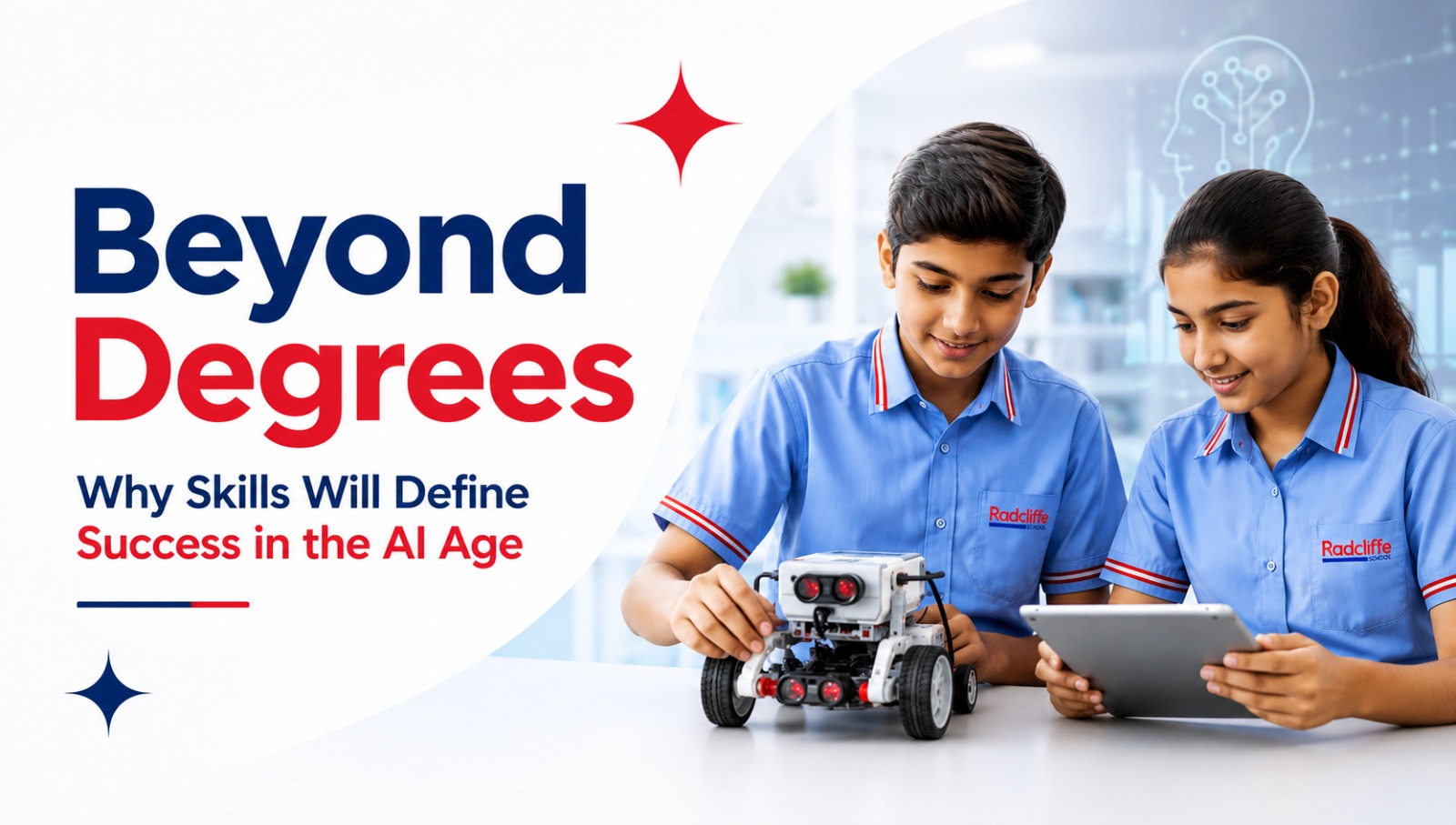
A decade from now, today’s students could be working in careers that haven’t even been invented yet. As Artificial Intelligence (AI) continues to reshape industries, routine tasks are becoming automated, and new job roles are emerging at an unprecedented pace. This shift is redefining what it means to be “career-ready” and highlighting the importance of building future-focused skills from an early age.
According to the World Economic Forum, around 85 million jobs worldwide are expected to be transformed by AI and automation, while 97 million new roles may be created. This doesn’t mean jobs are disappearing—it means the skills needed for those jobs are changing.
For parents, this raises an important question:
How can we prepare children for careers that may not even exist today?
The answer lies in developing the right skills from an early age. Alongside academic knowledge, students need adaptability, creativity, digital literacy, communication, and problem-solving abilities to succeed in the future.
Let’s explore why skill-based education is becoming more important than ever and how schools and parents can work together to prepare children for an AI-driven world.
AI Is Changing Jobs—Not Eliminating Human Potential
Whenever a new technology emerges, there is concern that it will replace human workers. While AI is automating repetitive and routine tasks, it is also creating opportunities in fields such as data science, cybersecurity, robotics, healthcare, digital marketing, sustainable technologies, and AI development itself.
More importantly, many future careers will combine technical knowledge with human skills that machines cannot easily replicate.
These include:
- Critical thinking
- Creativity
- Emotional intelligence
- Leadership
- Collaboration
- Ethical decision-making
- Communication
The future belongs to people who can learn, adapt, and solve problems—not just those who memorise information.
The Shift from Degrees to Skills
For many years, educational success was measured by marks, degrees, and certificates. While qualifications remain important, employers are increasingly looking for candidates who can apply their knowledge in real-world situations.
Companies today value individuals who can:
- Think independently
- Work in teams
- Learn new technologies quickly
- Communicate ideas effectively
- Solve practical problems
This is why schools are moving towards experiential learning, project-based activities, coding, innovation labs, and interdisciplinary learning.
The goal is to help students build capabilities, not just collect certificates.
Why Early Skill Development Matters
Children develop many essential life skills long before they enter college.
Activities like participating in debates, science fairs, robotics competitions, sports, theatre, music, and community service help students build confidence and resilience.
These experiences teach children to:
- Handle challenges positively
- Collaborate with others
- Think creatively
- Manage time effectively
- Become confident communicators
These qualities often make the biggest difference in higher education and future careers.
Digital Skills Are Becoming Basic Skills
Just as reading and writing became essential in the past, digital literacy is becoming a foundational life skill today.
Students should understand:
- Safe and responsible use of technology
- Digital communication
- Coding fundamentals
- Data awareness
- AI literacy
- Online research skills
Learning how technology works helps children become creators rather than just consumers of digital content.
At the same time, it is equally important to teach responsible and ethical use of technology.
Lifelong Learning Will Define Career Success
One of the biggest changes AI brings is that learning no longer ends with school or college.
Professionals across industries are constantly upgrading their skills as technologies evolve.
Helping children develop curiosity, resilience, and a growth mindset encourages them to embrace continuous learning throughout their lives.
The ability to learn new skills quickly may become one of the most valuable career assets in the coming decades.
The Growing Importance of Vocational and Practical Learning
India is placing greater emphasis on vocational education through initiatives such as NEP 2020, Skill India Mission, PMKVY 4.0, and the Skill India Digital Hub.
These initiatives aim to bridge the gap between classroom learning and industry requirements by offering practical, job-oriented training.
Vocational education is no longer viewed as an alternative to academics. Instead, it complements classroom learning by helping students understand how knowledge is applied in real-life situations.
Exposure to entrepreneurship, financial literacy, design thinking, coding, and emerging technologies can help students discover their interests early and prepare for diverse career pathways.
Schools Play a Key Role in Building Employability
Preparing students for future careers begins long before they enter the workforce.
Schools can support this by creating learning environments that encourage exploration, innovation, and collaboration.
Modern classrooms increasingly focus on:
- Project-based learning
- STEM education
- Coding and computational thinking
- Communication skills
- Teamwork
- Leadership opportunities
- Creative arts and sports
- Critical thinking
These experiences help students become adaptable learners who are ready to navigate changing career landscapes.
What Parents Can Do Today
Parents play an equally important role in preparing children for the future.
Simple everyday practices can make a lasting impact:
- Encourage children to ask questions and explore new ideas.
- Allow them to solve problems independently instead of giving immediate answers.
- Support participation in sports, arts, and extracurricular activities.
- Help them develop healthy digital habits.
- Celebrate effort, curiosity, and learning—not just academic results.
- Introduce them to different careers and emerging technologies through discussions, books, and educational resources.
A child’s confidence grows when learning is viewed as an exciting journey rather than a race for marks.
How Radcliffe School Prepares Students for the Future
At Radcliffe School, education is designed to prepare students not only for examinations but also for the opportunities and challenges of tomorrow.
The school encourages experiential learning, critical thinking, collaboration, technology-enabled education, and holistic development. Students are provided opportunities to explore academics alongside sports, creative arts, innovation, and life skills.
Aligned with the vision of NEP 2020, Radcliffe School focuses on nurturing confident, adaptable learners who are ready to thrive in an AI-enabled and rapidly evolving world.
By combining strong academic foundations with future-ready skills, the school helps students build the confidence to pursue meaningful careers and lifelong learning.
Final Thoughts
Artificial Intelligence is reshaping industries, but it is also opening doors to exciting new opportunities. The question is not whether AI will change the workplace—it already is. The real question is whether today’s students will be equipped to grow with these changes.
Preparing children for the future requires more than academic excellence. It calls for curiosity, creativity, adaptability, digital literacy, and the confidence to keep learning throughout life.
When schools and parents work together to build these skills early, children are better prepared to navigate future careers, contribute to society, and embrace opportunities in a changing world.
At Radcliffe School, this future-focused approach to education helps students build the knowledge, skills, and mindset they need to succeed in the years ahead.