
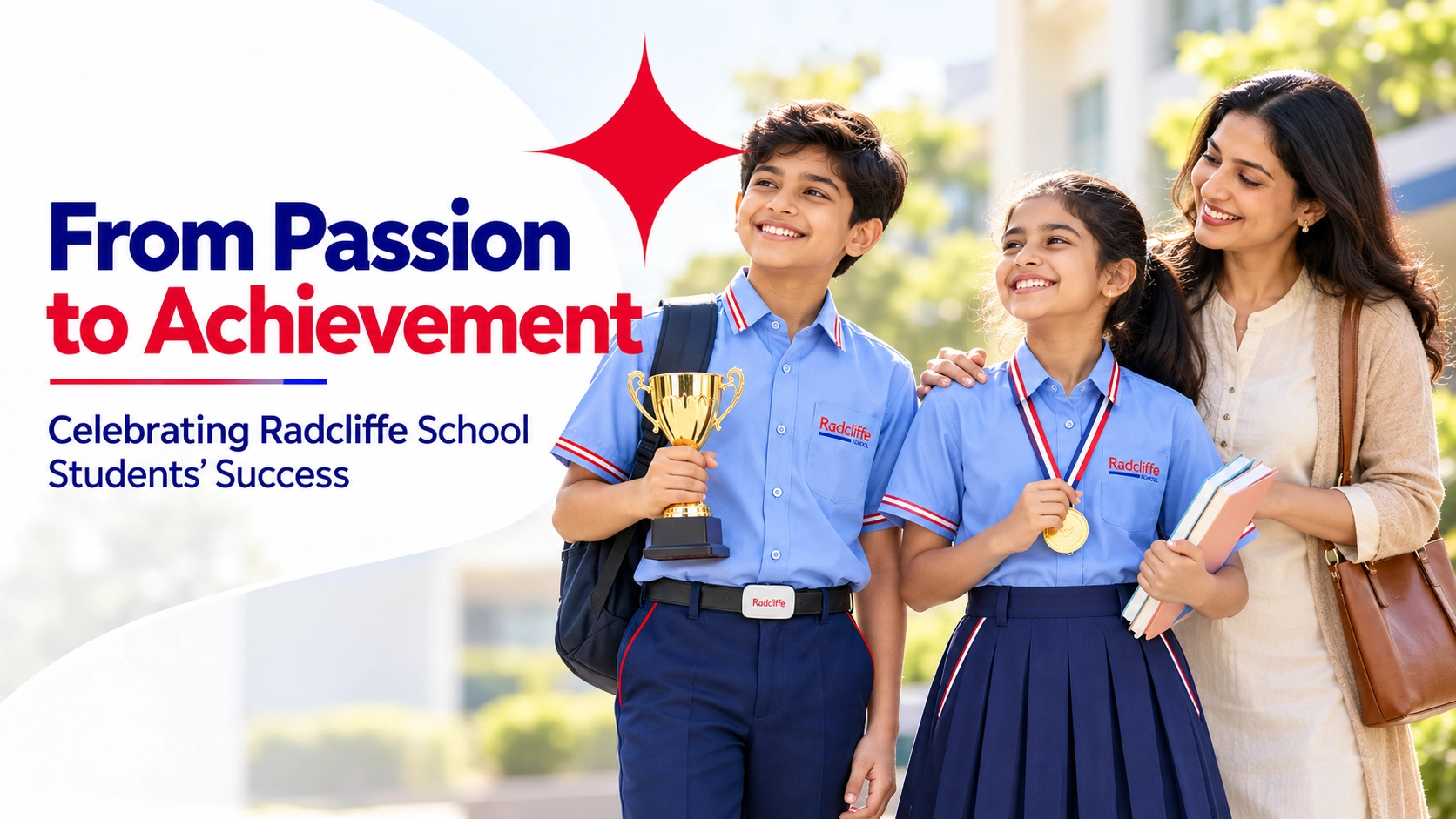
For parents, a child’s education is about much more than marks and examinations. While academic learning provides an important foundation, children also need opportunities to discover their interests, build confidence, learn from setbacks, and understand the value of teamwork.
This is where sports and extracurricular activities, performing arts, competitions, and other experiences become an important part of student development. A child who learns to practise for a competition, perform in front of an audience, work with a team, or return after a setback is developing skills that can stay with them for life.
At Radcliffe School, these opportunities are creating moments of pride while helping students discover what they can achieve. From sporting championships to remarkable individual accomplishments, our students continue to show that talent grows when it is supported by dedication and opportunity.
Skills Are Built Through Experience
Talent may give a child a starting point, but experience helps turn that potential into ability.
When children participate in sports, they learn that improvement comes through regular practice. When they perform on stage, they learn to manage nervousness and express themselves with confidence. When they compete, they learn that winning is only one part of the experience.
These activities help children develop qualities such as:
- Discipline and consistency
- Teamwork and cooperation
- Confidence and communication
- Focus and determination
- Resilience after setbacks
- Leadership and responsibility
- Goal-setting and time management
These are not skills that can always be learned from a textbook. They are built through participation and experience.
That is why parents looking for the best school for holistic development should consider how a school creates opportunities for children to explore different interests alongside academics.
From School Grounds to Bigger Stages
The achievements of Radcliffe School students across different campuses demonstrate what can happen when young learners are encouraged to participate, practise, and pursue their interests.
At Radcliffe School, Kharghar, students celebrated a major sporting achievement by lifting the Infinity Cup 2026. Another student earned a place in the Maharashtra U-16 Cricket Camp, marking an important step in their sporting journey.
These achievements are about more than trophies or selection. They represent hours of practice, teamwork, discipline, and the willingness to keep improving. For young athletes, every training session is an opportunity to learn something new and every match is a chance to put that learning into practice.
Young Talent Can Begin with Curiosity
Exceptional talent can sometimes reveal itself in the most unexpected ways.
At Radcliffe School, Bengaluru, 2.5-year-old Ithihasini R. earned the prestigious “Super Talented Kid” title and was recognised by the International Book of Records after answering 74 general knowledge questions in 4 minutes and 51 seconds.
Her achievement is a wonderful reminder that children can display remarkable curiosity from a very young age.
For parents, the lesson is not that every child needs to achieve a record. Rather, it is about noticing what naturally interests a child and giving them the encouragement and space to explore it.
A child’s curiosity today can become a skill tomorrow.
Building Strength, Discipline and Sportsmanship
Sports education teaches lessons that extend far beyond the playing field.
At Radcliffe School, Greater Noida, students represented the school at a Taekwondo Championship held at Sharda University. Their determination and confidence helped them emerge victorious, winning multiple medals for the school.
Taekwondo demands focus, physical fitness, discipline, courage, and self-control. Participating in a competitive environment also teaches students how to respect opponents, follow rules, respond to pressure, and accept both victories and setbacks with sportsmanship.
Similarly, Alisha Agarwal, a Grade 2 student of Radcliffe School, Ulwe, won a Silver Medal at the State Level Roller Hockey Championship held in Pune as part of the Maharashtra State Roller Hockey competition.
Alisha’s achievement reflects her dedication, hard work, and sportsmanship, along with the guidance and support of her skating coach, Shashikant Gaikwad.
For a young student, such experiences can build confidence that extends beyond sport and into the classroom and everyday life.
Performing Arts and Extracurricular Activities Have a Role Too
Not every child finds their passion on a sports field.
Some children discover their confidence through music, dance, theatre, public speaking, art, or other forms of creative expression. Performing arts can help children communicate, manage stage confidence, express emotions, work with others, and develop an appreciation for creativity.
This is why a balanced approach to education matters. Giving children opportunities across sports, performing arts, academics, and other extracurricular activities allows them to discover strengths that may not always be visible through examination results.
A holistic learning environment does not ask every child to excel in the same way. It gives every child the opportunity to find their own way to shine.
What Children Learn Beyond the Trophy
A medal may be the most visible part of an achievement, but it is rarely the most valuable.
Behind every medal is preparation. Behind every selection is practice. Behind every performance is the courage to step forward.
Competitions teach children how to set goals and work towards them. They learn how to deal with pressure, accept feedback, manage disappointment, and return with renewed determination.
They also learn an important lesson: progress matters as much as winning.
A child who does not win today may still become stronger, more confident, and better prepared for the next opportunity. These experiences build resilience—a quality that will remain valuable long after school competitions are over.
Why Parents Should Encourage Participation, Not Just Winning
It is natural for parents to feel proud when their child wins a medal or receives recognition. But the greatest benefit of extracurricular participation is not always the result.
Parents can make a meaningful difference by encouraging children to:
Try different activities. A child may need to explore several interests before discovering a genuine passion.
Focus on effort. Praise regular practice, persistence, and improvement rather than only the final result.
Learn from setbacks. Losing a match or missing an opportunity can become a valuable learning experience.
Enjoy the process. Children are more likely to develop lasting interests when they associate activities with joy and discovery.
Avoid comparisons. Every child develops at a different pace. Their progress should be measured against their own previous efforts.
The goal is not to make every child a champion. The goal is to help every child discover what they enjoy, build confidence in their abilities, and develop the courage to keep learning.
How Radcliffe School Nurtures Future-Ready Students
At Radcliffe School, academic learning is complemented by opportunities that support the wider development of students.
Sports, performing arts, competitions, and other extracurricular activities can help children develop the personal qualities they need to navigate an evolving world. Confidence, communication, collaboration, discipline, creativity, and resilience are valuable future-ready skills, whether a child eventually chooses sport, science, business, the arts, technology, or another field.
The student achievements celebrated across Radcliffe School campuses reflect this broader idea of education: children need space to learn, participate, practise, compete, perform, and discover their strengths.
For parents considering a school that values holistic education, these opportunities can be an important part of the decision.
Celebrating Every Milestone
From the Infinity Cup 2026 and Maharashtra U-16 Cricket Camp to Taekwondo medals, a State Level Roller Hockey Silver Medal, and an extraordinary achievement by a young learner in Bengaluru, the accomplishments of Radcliffe School students offer many reasons to celebrate.
But the real achievement goes deeper.
It is in the discipline developed during practice. The confidence gained after stepping onto a stage or playing field. The teamwork learned through shared goals. The resilience built after disappointment. And the curiosity that encourages a child to ask, “What can I do next?”
Skills aren’t only born, they’re built.
At Radcliffe School, every opportunity to participate can become an opportunity to learn and grow. Parents looking for a learning environment where children can develop academically while discovering their interests can explore the opportunities at Radcliffe School.
Your child’s journey may begin with a classroom, but their potential can take them much further. Explore Radcliffe School and give your child the opportunity to learn, participate, discover, and achieve with confidence.
FAQs
1. Why are extracurricular activities important for students?
Extracurricular activities help children develop confidence, teamwork, discipline, communication, resilience, and other skills that complement academic learning.
2. How does sports education benefit children?
Sports can help children develop physical fitness, focus, discipline, teamwork, goal-setting, and the ability to handle both success and setbacks.
3. Why should parents look for holistic education?
Holistic education supports a child’s academic, physical, social, emotional, and creative development rather than focusing only on examination results.
4. Should children participate in competitions even if they may not win?
Yes. Competitions give children opportunities to practise, handle pressure, receive feedback, build confidence, and learn how to respond positively to both success and setbacks.
5. How does Radcliffe School support student development?
Radcliffe School provides opportunities for students to participate in academics, sports, performing arts, competitions, and other activities that can support confidence, discipline, creativity, teamwork, and holistic development.