
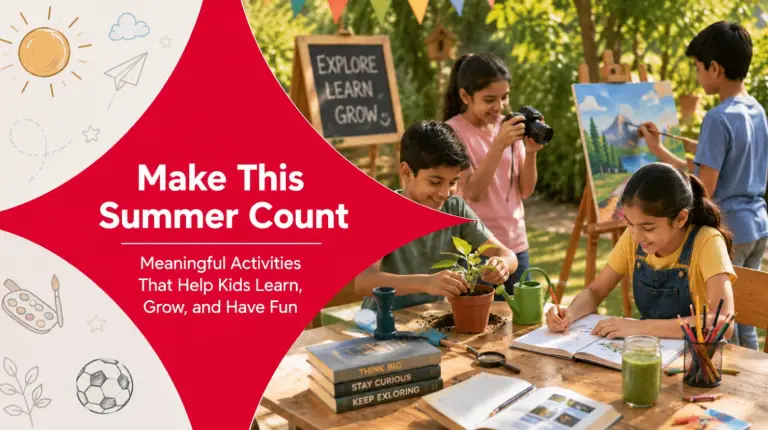
Summer holidays have a charm of their own. The early morning sunlight, long unstructured afternoons, and the absence of school routines create the perfect space for children to explore, experiment, and simply be themselves. While it is easy for kids to slip into endless screen time, summer can actually become one of the most enriching phases of their year if guided thoughtfully.
The key lies in striking a balance between fun and learning. Children do not need rigid schedules during their holidays, but they do benefit from engaging activities that spark creativity, build skills, and strengthen emotional connections. Here is a thoughtfully structured guide to help you turn this summer into a season of growth, joy, and lasting memories.
Why Summer Activities Matter More Than You Think
Summer holidays are not just a break from academics. They are an opportunity for children to discover new interests, develop independence, and build life skills that go beyond textbooks. Activities during this time can nurture creativity, improve confidence, and even strengthen family bonds.
When children engage in meaningful experiences, they learn without pressure. Whether it is painting, swimming, or storytelling, each activity contributes to their overall development in subtle but powerful ways.
Unleashing Creativity Through Arts and Crafts
Arts and crafts have always been a natural extension of childhood. Give a child a few colors and some paper, and you will see imagination come alive.
From finger painting and blow painting to DIY crafts and paper quilling, creative activities allow children to express themselves freely. The beauty of art lies in the fact that there is no right or wrong. Every creation is unique.
You can make this even more exciting by introducing small projects at home. Instead of buying new materials, encourage children to look around the house for inspiration.
Turning Everyday Items into Creative Projects
One of the most rewarding ways to engage kids is by teaching them how to repurpose everyday items. This not only fuels creativity but also builds environmental awareness.
For example, empty cereal boxes can be transformed into colorful storage containers. Old jars can become pen stands. Cardboard pieces can turn into miniature houses or art frames.
When children learn to create something new from what already exists, they begin to understand the value of resources. It also gives them a sense of accomplishment that is far more meaningful than simply buying something new.
Exploring New Skills Through Hobby Classes
Summer is the perfect time for children to explore hobbies that they may not get time for during the academic year.
Enrolling in hobby classes like dance, music, or spoken English can provide structured learning while still being enjoyable. These activities help children build confidence, improve communication, and discover hidden talents. The goal is not to overload them with classes but to give them exposure. Even one or two well-chosen activities can make a significant difference in their personality development.
The Power of Music and Performing Arts
Music has a unique way of calming the mind while stimulating creativity. Whether it is learning an instrument, singing, or simply understanding rhythm, music can become a lifelong companion for children. You can introduce your child to different styles, from classical Indian music to contemporary western forms. Some children may enjoy playing instruments, while others might find joy in singing or composing. The process matters more than perfection. Music gives children a safe space to explore emotions and develop discipline without pressure.
Building Confidence with Spoken English Skills
Communication plays a crucial role in a child’s growth. Spoken English classes during summer can help children become more confident in expressing their thoughts.
These sessions often include interactive activities like storytelling, role-playing, and group discussions. Over time, children improve their vocabulary, pronunciation, and public speaking abilities.
This skill becomes especially valuable in both academic and social environments, helping children feel more self-assured.
The Importance of Sports and Physical Activities
While creative pursuits are essential, physical activity is equally important for a child’s overall well-being.
Outdoor sports like football, skating, and cycling not only keep children active but also teach teamwork and discipline. Physical movement helps improve stamina, coordination, and mental health.
Encouraging children to step outside and play is one of the simplest yet most effective ways to ensure a healthy lifestyle.
Learning Self-Defense as a Life Skill
In today’s world, self-defense is no longer optional. It is a valuable life skill that every child should have.
Introducing activities like karate, judo, or taekwondo during summer can help children build confidence, focus, and resilience. These disciplines also teach respect, patience, and self-control.
If your child feels hesitant, consider joining them. Turning it into a shared activity can make the experience more enjoyable and less intimidating.
Swimming: Fun, Fitness, and Safety Combined
Swimming is often the highlight of summer for children. It is not just a fun activity but also an essential life skill. Regular swimming improves muscle strength, endurance, and flexibility. More importantly, it teaches water safety, which is crucial. Whether it is a structured class or casual pool time, swimming offers both enjoyment and long-term benefits.
Strengthening Bonds Through Family Activities
Ask anyone about their childhood summers, and you will often hear stories about time spent with family.
Simple activities like reading together, cooking meals, gardening, or even having a small home picnic can create lasting memories. These moments build emotional connections that children carry with them for life.
In a fast-paced world, summer provides the perfect opportunity to slow down and reconnect as a family.
Developing a Love for Reading and Storytelling
Reading is one of the most powerful habits you can instill in a child. Summer offers the time and space to nurture this habit.
Set aside a specific time each day for reading or storytelling. Choose books with engaging illustrations and meaningful lessons. As you read, involve your child by asking questions or encouraging them to describe what they see.
Over time, this not only improves language skills but also enhances imagination and critical thinking.
Helping Children Connect with Nature
Children are naturally curious about the world around them. Summer is the perfect time to deepen their connection with nature.
Gardening is a wonderful way to start. Take your child to a local nursery and let them choose plants. Teach them how to water, care for, and nurture them.
Watching a plant grow from a seed to a blooming flower can be a magical experience. It teaches patience, responsibility, and respect for nature in a way no textbook can.
Travel as a Learning Experience
Traveling during summer holidays can be both refreshing and educational. Whether it is visiting relatives or exploring a new destination, every journey teaches something new.
A short trip to a nearby hill station can provide a break from routine while offering exposure to different environments. Children learn adaptability, observation, and appreciation for diversity through travel.
Even a simple weekend getaway can create memories that last a lifetime.
The Role of Schools in Holistic Development
While summer activities at home play a crucial role, the foundation of a child’s growth is shaped by their educational environment.
Institutions like Radcliffe School focus on creating a balanced approach to learning. Known as one of the best CBSE schools in India, Radcliffe School blends academic excellence with creativity, life skills, and co-curricular exposure.
Their future-ready approach combines Cambridge and IB rigor with personalized learning. Through their RadSPARK framework, they nurture curiosity, courage, and capability in children. With strong emphasis on sports and performing arts, students are encouraged to grow into confident and well-rounded individuals.
This kind of holistic foundation complements the learning that happens during summer, ensuring that children are continuously evolving.
Creating the Perfect Summer Routine
You do not need a strict timetable to make summer productive. Instead, focus on creating a flexible routine that includes a mix of activities.
A balanced day might include:
- A creative activity like art or craft
- A physical activity such as sports or swimming
- A learning session like reading or hobby classes
- Family time in the evening
The idea is to keep children engaged without overwhelming them.
Final Thoughts
Summer holidays are more than just a break from school. They are an opportunity to shape experiences that influence a child’s growth in meaningful ways.
Whether it is painting a picture, learning a new skill, playing outdoors, or simply spending time with family, every moment contributes to their development.
What truly matters is not how many activities you plan, but how present you are in those moments. Because at the end of the day, children may forget what they learned, but they will always remember how they felt.
Make this summer count.