
Introduction
In the early years of a child’s life, every experience plays a crucial role in shaping their cognitive, emotional, and social development. Among these experiences, music stands out as a powerful and transformative tool. It is not just about learning melodies or rhythms. Music builds neural connections, enhances creativity, and nurtures emotional intelligence in ways that traditional teaching methods often cannot.
At Radcliffe School, widely recognized among the Top CBSE Schools in India, music is not treated as an extracurricular activity. Instead, it is integrated into the learning process to support holistic development. This approach ensures that children grow not only academically but also emotionally and socially.
Let’s explore how music contributes to lifelong learning and why it plays a vital role in shaping young learners.
Music and Brain Development in Early Childhood
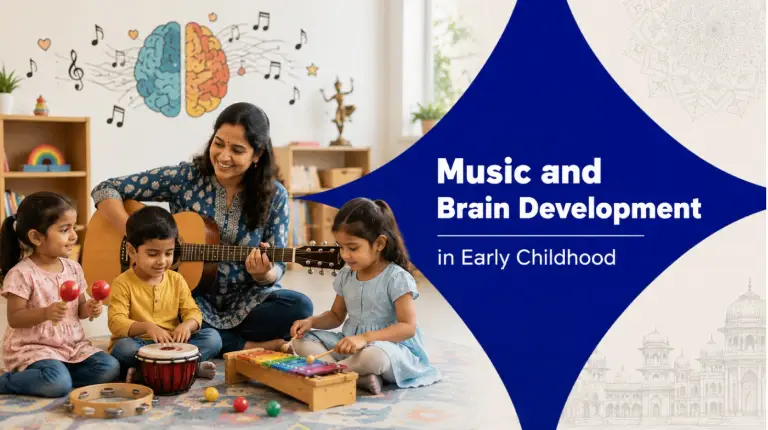
The early years of a child’s life are marked by rapid brain development. During this time, the brain is highly adaptable and responsive to stimuli. Music engages multiple areas of the brain simultaneously, including those responsible for memory, language, and auditory processing.
When children listen to or participate in music, their brains begin forming strong neural connections. These connections support better learning outcomes in subjects like mathematics and reading. Rhythm helps in understanding patterns, while melodies improve memory retention.
At Radcliffe School, early exposure to music is carefully designed to enhance concentration and communication skills. Teachers observe that children who engage with music regularly tend to grasp concepts faster and express themselves more clearly. This is one of the reasons why institutions like Radcliffe are considered among the Top CBSE Schools in India, as they focus on foundational development from the very beginning.
Developing Fine Motor Skills Through Musical Activities
Music is not only beneficial for cognitive growth but also plays a significant role in physical development. Activities such as clapping, tapping, or playing simple instruments help children refine their motor skills.
These actions improve hand eye coordination and strengthen muscle control. For younger children, even simple rhythmic exercises can enhance spatial awareness and body coordination. These skills later contribute to better handwriting, drawing, and overall physical confidence.
Radcliffe School incorporates music-based activities into everyday learning, ensuring that children engage in hands-on experiences. This method aligns with global educational practices where learning is interactive and engaging rather than passive.
Emotional Growth and Social Development Through Music
Children often find it difficult to express their emotions in words, especially at a young age. Music provides a safe and creative outlet for emotional expression. Through songs and rhythms, children learn to identify and understand feelings such as happiness, excitement, and even sadness.
Group music sessions further enhance social interaction. Singing together, participating in rhythm games, or performing as a group teaches children the value of teamwork. They learn to listen, cooperate, and respect others’ contributions.
At Radcliffe School, music sessions are designed to build empathy and emotional awareness. This focus on emotional intelligence is a defining characteristic of the Top CBSE Schools in India, where education goes beyond textbooks to prepare children for real life situations.
Building Confidence Through Musical Expression
Confidence is a key factor in a child’s overall development. Music provides numerous opportunities for children to build self confidence in a natural and enjoyable way.
Whether it is learning a new song, performing in front of classmates, or simply participating in a group activity, every small achievement contributes to a child’s sense of accomplishment. These experiences encourage children to step out of their comfort zones and embrace new challenges.
Radcliffe School emphasizes encouragement over perfection. Students are appreciated for their efforts rather than judged solely on performance. This approach helps in building resilience and a positive mindset, qualities that are essential for long term success.
The Connection Between Music and Academic Excellence
Many studies have shown a strong link between music education and academic performance. Children who are exposed to music at an early age often demonstrate better problem solving skills and enhanced abstract thinking.
Music stimulates both sides of the brain, allowing children to think creatively while also developing logical reasoning abilities. This dual engagement supports learning across various subjects, including mathematics, science, and language.
At Radcliffe School, music is integrated into the curriculum in a way that complements academic learning. This balanced approach is one of the reasons why it is ranked among the Top CBSE Schools in India, as it ensures that students excel not only in exams but also in critical thinking and innovation.
Encouraging Creativity and Independent Thinking
Creativity is an essential skill in today’s world. Music encourages children to think beyond boundaries and explore their imagination. It allows them to experiment with sounds, rhythms, and expressions, fostering a sense of curiosity.
Children who engage in musical activities often become more open to new ideas and perspectives. They learn to approach problems creatively and develop innovative solutions.
Radcliffe School nurtures this creative mindset by providing students with opportunities to explore different forms of music. This exposure helps in developing independent thinking, which is a key trait among students from the Top CBSE Schools in India.
Music as a Gateway to Cultural Awareness
Music is often referred to as a universal language because it transcends geographical and cultural boundaries. Introducing children to different types of music helps them understand and appreciate diverse cultures.
Exposure to various musical traditions broadens a child’s perspective and fosters inclusivity. It teaches them to respect differences and embrace diversity.
At Radcliffe School, students are introduced to a variety of musical styles, ensuring that they develop a global outlook. This cultural awareness is an important aspect of holistic education and prepares students to thrive in an interconnected world.
Integrating Music into Everyday Learning
One of the key strengths of Radcliffe School is its ability to seamlessly integrate music into daily learning. Instead of treating it as a separate subject, music is used as a tool to enhance understanding across disciplines.
For example, rhythm can be used to teach mathematical patterns, while songs can help in language learning. This integrated approach makes learning more engaging and effective.
Such innovative teaching methods are what set apart the Top CBSE Schools in India, as they focus on making education meaningful and enjoyable for students.
Why Parents Prefer Top CBSE Schools in India for Holistic Development
Parents today are increasingly looking for schools that offer more than just academic excellence. They want institutions that focus on the overall development of their children.
The Top CBSE Schools in India are known for their balanced approach to education. They combine strong academic foundations with extracurricular activities like music, sports, and arts. This ensures that students develop essential life skills along with academic knowledge.
Radcliffe School stands out in this regard by offering a comprehensive learning environment where music plays a vital role in shaping young minds.
Conclusion
Music is much more than an art form. It is a powerful educational tool that supports cognitive growth, emotional development, and social interaction. When introduced at an early age, it lays the foundation for lifelong learning and success.
Radcliffe School, recognized among the Top CBSE Schools in India, understands the importance of integrating music into education. By creating an environment where children can explore, express, and grow, the school ensures that students are well prepared for the future.
Choosing the right school is one of the most important decisions for any parent. With its holistic approach and focus on overall development, Radcliffe School offers a nurturing space where children can truly thrive.
Admissions for the academic year 2026 to 27 are now open. It is an opportunity to give your child an education that goes beyond textbooks and builds a strong foundation for life.